
Storage Unit Auctions: Costs, Risks, Taxes and Scams to Avoid
If you want to bid on storage unit auctions in the US, start with well known sites where signing up is free and the auction rules are easy to read.
Here you will see where to look, how government auctions differ, what to check before you bid, how resale taxes work and how to avoid fraud.
Nothing on this page is an offer or promises profit. Every auction has its own rules, and the rules of the auction you choose are the ones that count.
Where to look for storage unit auctions
StorageTreasures is a website and app that lists storage unit auctions. Its home page says that more than 375,000 bidders use it and that it covers auctions from more than 20,000 facilities. You can search by ZIP code, state, city, facility name or keyword, and choose a distance radius.
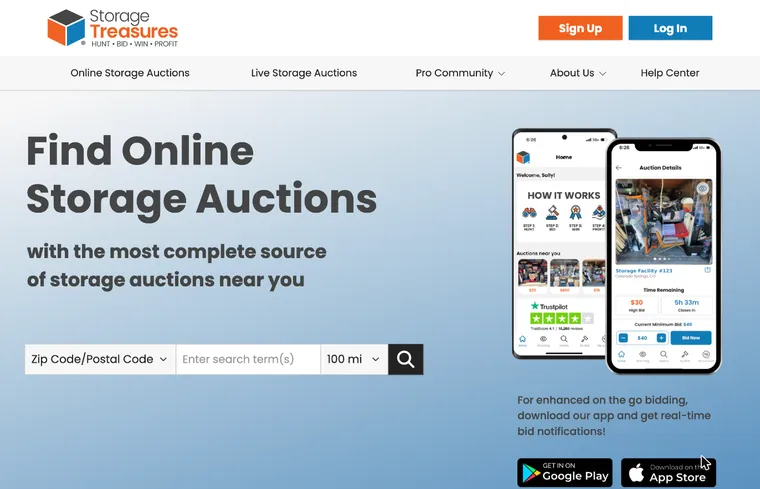
According to the site, creating an account is free, and after you win you contact the storage facility to pay for and claim the items. The site also has a page explaining lien laws by state. Treat it as a starting point and confirm the rules with the facility and with your state.
Government auctions
The USAGov guide to seized and surplus property explains that these auctions can happen online, in person or by mail-in bid, and that the agency that owns the property may run the sale itself or hire an auction company. The government sites it lists include GSA Auctions, U.S. Treasury auctions and U.S. Marshals Service auctions.
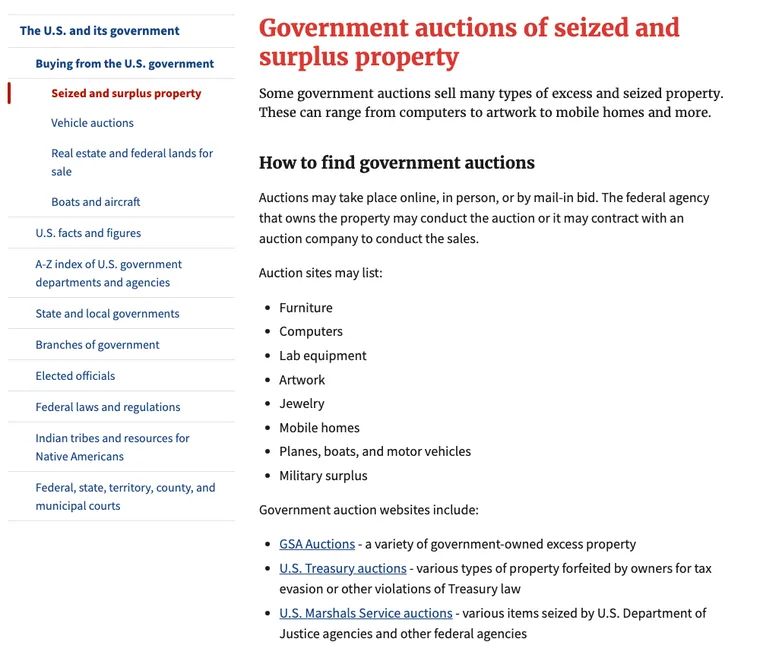
Lots can include furniture, computers, lab equipment, jewelry, mobile homes and vehicles. Read each description and its payment and pickup terms before you bid.
What to check before you bid
| Question | Why it matters |
|---|---|
| Can I see the lot, or only photos? | It sets how much risk you take |
| What fees are added to my bid? | They change the total cost |
| How long do I have to pick it up? | Picking up late can cost you the lot |
| How do I pay and claim the goods? | Avoids surprises with payment methods |
| Are returns allowed? | Most sales are final and as is |
Decide your maximum before the auction starts and respect it.
Check fees, pickup deadlines and payment methods.
Have transport, help and a place to keep or sell the goods.
Save receipts, messages and photos of the lot.
If you plan to resell
Reselling does not guarantee a profit. The real value depends on the condition of the items, demand and how long they take to sell. Sales tax and reporting rules depend on your state, so check your state’s tax website or ask an accountant before you start.
How to avoid fraud
- Do not pay for “exclusive lists” of government auctions, because official listings are free to view
- Check that you are on the real site before you sign up or pay
- Never send money in advance to strangers
- Be wary of prices that look too good and of pressure to pay fast
- Pay only in the ways the platform or facility states
- Keep the auction terms in writing
If something feels wrong, stop and confirm it another way. Pressure to pay quickly and requests for advance payment are the signs that repeat most in auction scams.
Independent information. Agora Educação is not an auction house or broker and has no relationship with StorageTreasures, USAGov, GSA, the U.S. Marshals Service or any storage facility. Nothing here is an offer, legal or tax advice, or a promise of profit. Rules, fees and deadlines change by state and by auction, so confirm everything in the auction you choose before you bid. Information checked on official sources on 26 October 2026.